
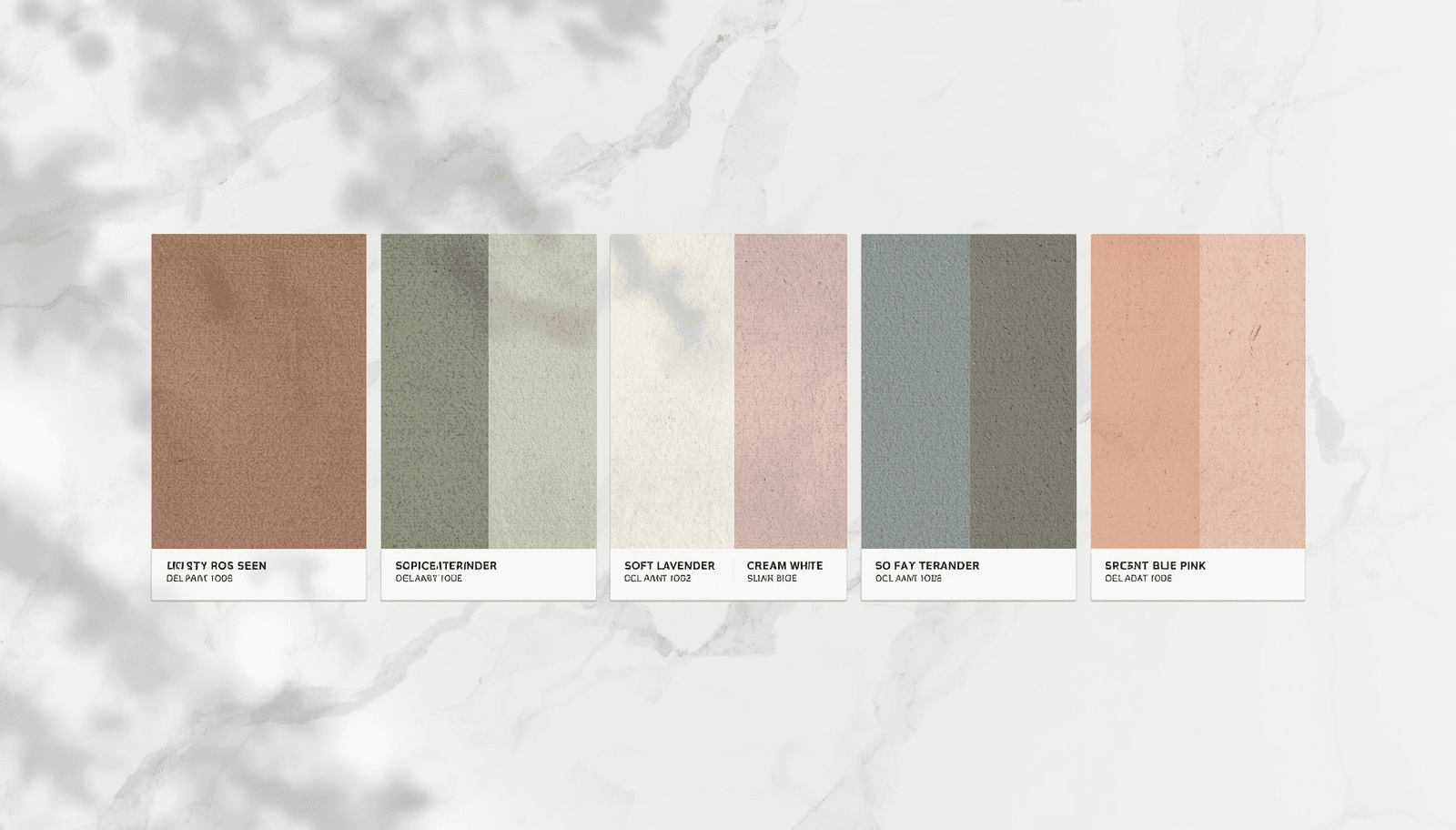
"Aesthetic" has become the dominant organizing concept for visual identity on social media — replacing earlier language like "style" or "theme" — because it describes something more precise: a cohesive sensory world defined by specific color, texture, and mood relationships. A well-constructed aesthetic color palette does not just look pleasant; it communicates an entire emotional register instantly.
Research published in the Journal of Business Research (Babin, Hardesty & Suter, 2003) established that color is the primary driver of initial product and brand perception, with studies consistently finding that 62 to 90 percent of a viewer's first-impression assessment is based on color alone. In social media contexts where content is evaluated in under two seconds during a scroll, this compression of judgment is even more pronounced. Choosing the right aesthetic color palette is not a decorative decision — it is a communication decision.
This guide documents the most significant aesthetic directions in color in 2026, each grounded in specific color theory principles, with hex codes and use cases. All palettes can be generated and exported for free at ThemePalette.
What Makes a Color Palette "Aesthetic"?
The word aesthetic, derived from the Greek aisthetikos (relating to sense perception), entered everyday visual culture primarily through Tumblr's tag ecosystem in the early 2010s, where users curated image collections organized by mood rather than subject matter.
In color terms, an aesthetic palette has three properties that separate it from a merely functional or harmonious palette:
Mood specificity. An aesthetic palette communicates a specific emotional world — not just "blue" but "overcast morning in a coastal town." The specificity is what creates resonance with an audience that shares the cultural reference.
Internal coherence. Every color in an aesthetic palette belongs to the same emotional register. A single color that breaks the mood — too saturated, too warm, too clean — collapses the effect.
Cultural legibility. Aesthetic palettes draw on established visual traditions — the dark academia library, the cottagecore meadow, the Y2K chrome surface — that carry pre-loaded emotional associations for the audience. The palette works because it activates a recognizable sensory memory.
Academically, this aligns with research by Labrecque and Milne (2012) published in the Journal of the Academy of Marketing Science, which found that color communicates brand personality dimensions — competence, excitement, sincerity, sophistication, ruggedness — with a precision that copy and imagery alone cannot achieve.
Aesthetic Color Palettes for 2026
1. Dark Academia
Aged Parchment: #E8D8B0 (Primary surface — warm, historical ground)
Library Brown: #6B4C2A (Secondary — wood, leather, antiquity)
Ink Black: #1C1612 (Text and dominant dark — near-black with warm undertone)
Faded Olive: #7A7A50 (Accent — aged botanical reference)
Dusty Gold: #C9A84C (Highlight — candlelight, gilded book spines)
Dark academia as a visual aesthetic emerged from literary communities on Tumblr circa 2015–2016 and reached mainstream recognition through TikTok in 2020. Its color language references the physical environment of old European universities .
The palette works in design because it activates a strong sensory memory of an idealized scholarly environment, even for viewers who have never been inside a medieval library. In 2026..
The warmth of the palette — every color has a significant yellow or red undertone — is what produces the candlelit quality. No color in a dark academia palette should be cool or neutral; even the near-black ink should read as warm rather than pure.
2. Cottagecore Meadow
Meadow Green: #8AB87A (Primary — sunlit foliage)
Wildflower Pink: #E8B4C0 (Secondary — field flowers)
Butter Cream: #FDF4DC (Surface — warm, natural light)
Dusty Lavender: #C0B0D4 (Accent — distant field reference)
Bark Brown: #7A5C3A (Grounding dark — earth, wood)
Cottagecore's color language is derived from the specific palette of an English or Northern European meadow in summer — not the saturated primary green of tropical vegetation, but the softer, more varied greens of temperate grassland.
Pinterest Predicts data shows a growing cultural fascination with nature's quiet narratives and emotional resonance — the same underlying movement that drives cottagecore's sustained popularity across multiple platform cycles.
In design, cottagecore color performs strongly for independent food brands, handmade goods, sustainable fashion, and any brand positioning itself as an alternative to industrial-scale production.
3. Ethereal / Dreamcore
Digital Lavender: #B497BD (Primary — the signature 2026 dreamy hue)
Pearl White: #E5E4E2 (Surface — soft luminous base)
Soft Mist Blue: #A8C0D8 (Secondary — atmospheric depth)
Rose Quartz: #F4C0C8 (Accent — gentle warmth)
Deep Twilight: #2A1E3C (Anchor — dark without harshness)
Digital Lavender has been identified by leading color authorities as a defining 2026 hue — a futuristic yet calming shade that bridges technology and wellness, making it the central color of the ethereal aesthetic direction this year. The palette produces what designers describe as the "dreamcore" quality: colors that feel slightly desaturated and soft-focused, as if seen through translucent fabric or frosted glass.
Iridescent aquas, soft teals, pearlescent purples, and glittery silvers create dreamy, fluid palettes that shift like light on water, producing an effect that feels magical and otherworldly — the defining quality of the ethereal aesthetic.
This palette dominates wellness technology, meditation and mindfulness apps, digital art, and any brand seeking to communicate transformation or otherworldly quality.
4. Y2K Chrome
Chrome Silver: #C0C8D0 (Primary — metallic surface reference)
Electric Blue: #4080FF (Secondary — CRT screen blue)
Hot Pink: #FF4090 (Accent — maximum Y2K energy)
Digital White: #F0F4FF (Surface — slightly blue-tinted white)
Deep Void: #0A0A14 (Dark anchor — night sky, deep space)
Y2K visual culture — the aesthetic of late 1990s and early 2000s consumer technology and fashion — has undergone significant design revival since 2022. Its color language references the specific materials of that era: chrome-finish hardware, CD iridescence, CRT monitor blue-white light, and the high-saturation pink and blue of early internet graphic design.
The Ethereal Core 2026 art trend is defined by soft pastels, flowing forms, celestial elements, and dreamy compositions — and Y2K chrome occupies the more energetic end of this celestial color direction, adding metallic and electric qualities to the dreamy base.
The palette demands maximum saturation on the accent colors — a desaturated hot pink or electric blue defeats the purpose.
Used most effectively in Gen Z-targeted fashion, music and entertainment branding, gaming, and digital-native brands that want maximum visual energy.
5. Muted Vintage
Faded Rose: #C4908A (Primary — desaturated, time-worn pink)
Dusty Sage: #8A9E84 (Secondary — aged botanical)
Warm Cream: #F2EAD8 (Surface — aged paper, old linen)
Sepia Brown: #8C6840 (Accent — photographic warmth)
Graphite: #4A4A48 (Text — warm-toned dark neutral)
The muted vintage palette operates through desaturation as a design principle — every color is pulled toward grey, as if faded by time and light exposure. The palette references the specific color shifts that occur in aged photographic prints, particularly hand-colored photographs from the early 20th century and faded fashion photography from the 1970s.
The technical key to this palette is ensuring that no color exceeds 55% saturation. As soon as any color moves toward full saturation, the vintage quality collapses and the palette reads as contemporary rather than aged.
6. Botanical Illustration
Fern Green: #6A9E72 (Primary — naturalistic plant color)
Dusty Rose: #C9968A (Secondary — botanical flower reference)
Antique Ivory: #F2EAD8 (Surface — aged illustration paper)
Warm Gold: #C9A84C (Accent — gilded botanical plate edge)
Deep Ink: #2A2A1C (Text — warm drawing ink)
The botanical illustration aesthetic draws directly from the visual conventions established by scientific botanical artists working between approximately 1750 and 1900 — the tradition that includes Georg Dionysius Ehret, the Bauer brothers.
The "Earthly Wonders" 2026 art trend is rooted in botanical storytelling, featuring moody palettes, lush foliage, and a soft, mystical vibe grounded in real interaction with nature — the contemporary design expression of the same visual tradition that botanical illustration established three centuries earlier.
This palette carries genuine historical authority — it is not simply a soft aesthetic but one with a documented lineage in scientific and artistic practice
7. Coastal Grandmother
Sea Glass: #88B0A8 (Primary — ocean-smoothed glass)
Warm Linen: #EDE0CE (Secondary — aged natural textile)
Driftwood: #A08C78 (Accent — weathered wood)
Soft Sky: #C0D4E0 (Surface accent — coastal light)
Deep Slate: #3A4A52 (Text — storm-cloud anchor)
The "coastal grandmother" aesthetic — named and popularized by content creator Lex Nicoleta on TikTok in 2022 — references the visual world of a specific cultural archetype: an older woman with impeccable, understated taste living near the ocean.
The aesthetic's appeal across a much younger demographic than its name suggests reflects a broader cultural movement toward comfort, elegance without effort..
The Psychology Behind Aesthetic Color Choices
Understanding why specific aesthetic palettes resonate requires looking at both color psychology and cultural memory.
Color psychology research — including Labrecque, Patrick and Milne's comprehensive review in Psychology and Marketing (2013) — establishes that colors communicate personality dimensions consistently across audiences. Sophisticated palettes (muted, desaturated, warm neutrals) communicate exactly those qualities.
Cultural memory operates in parallel: the dark academia palette works not just because of its color properties but because it activates specific associations with the physical environments of learning and scholarship.
Research from arxiv (2024) studying color-emotion associations in art found that complementary colors create a dynamic and energetic impression, while monochromatic color schemes create a peaceful and harmonious impression.
How to Apply Aesthetic Palettes Without Losing Authenticity
Understand the source culture before extracting its color. Applying dark academia color to a brand that has nothing to do with scholarship or literary tradition produces dissonance — the audience that recognizes the aesthetic will notice the mismatch. Aesthetic palettes work best when the brand's actual values or content genuinely align with the aesthetic's cultural reference.
Test the palette under multiple lighting conditions. Aesthetic palettes are often defined by subtle temperature and saturation qualities that look different on screens with different calibration. A muted vintage palette can appear correctly desaturated on one monitor and too saturated on another.
Apply the 60-30-10 rule. The 60-30-10 proportion framework — 60% dominant color, 30% secondary color, 10% accent — is the most reliable structure for aesthetic palettes.
Generate and test any of these palettes at ThemePalette and preview them.
Conclusion
Aesthetic color palettes work because they do more than organize colors harmoniously — they communicate entire emotional worlds through color's relationship to cultural memory and sensory experience. The most effective aesthetic palettes in 2026 are grounded in specific visual traditions: the scholarly warmth of dark academia.
Understanding both the color theory and the cultural logic behind each palette is what allows designers to apply them with authenticity rather than simply surface imitation. Generate, customize, and export any of these palettes at ThemePalette.com.